
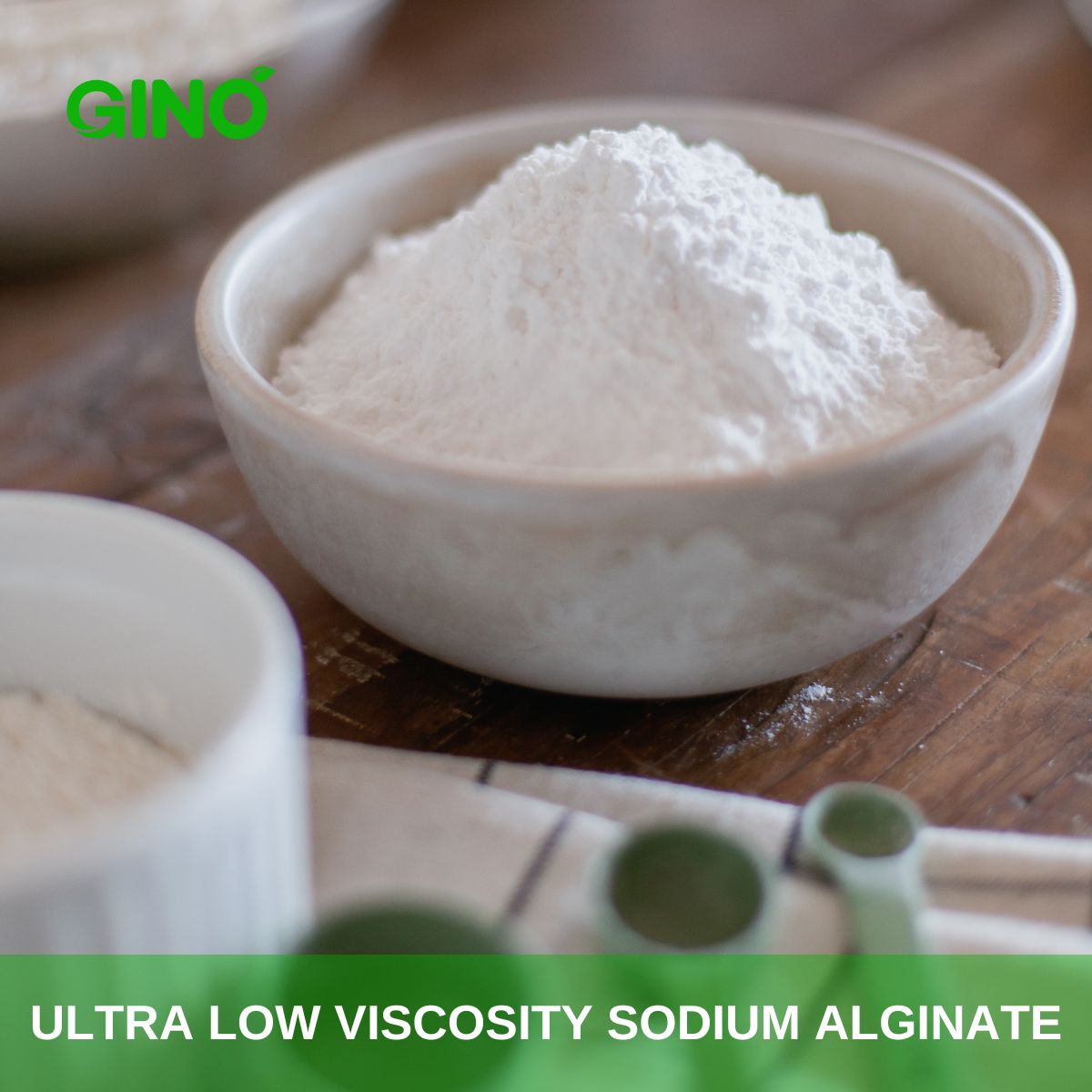
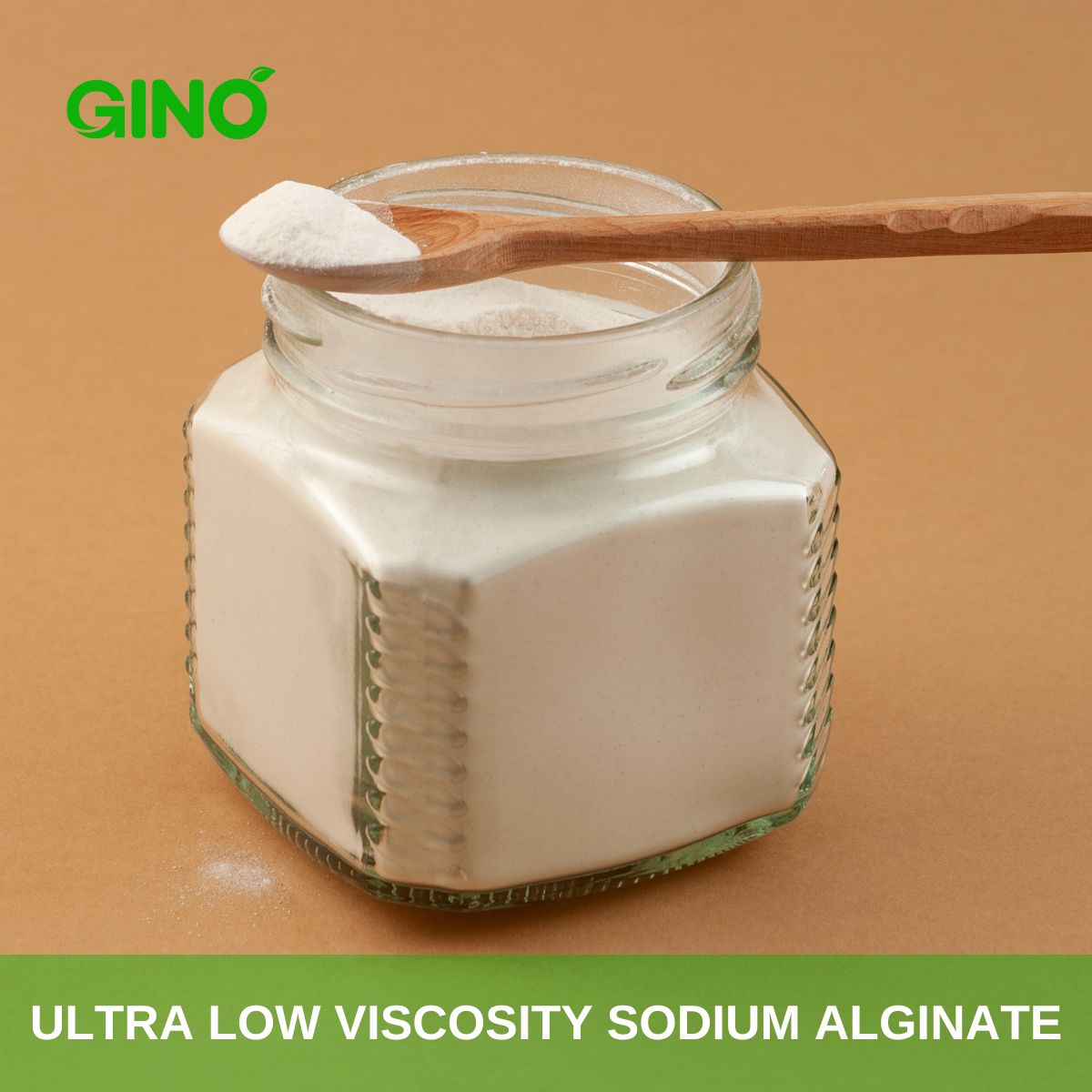
What is Ultra Low Viscosity Sodium Alginate Powder?
Sodium alginate is a natural polysaccharide extracted from brown seaweed, and it is commonly used in various industries, including food, pharmaceuticals, and textiles.
Ultra Low Viscosity Sodium Alginate Powder refers to a specific type of sodium alginate powder with extremely low viscosity, classified by the viscosity of a 10% solution, instead of 1%.
E401 ULV Sodium Alginate Powder
| Category | E Number | CAS No. | HS Code | Origin | MOQ | Synonyms |
|---|---|---|---|---|---|---|
|
Gelling Agent, Thickeners, Stabilizers |
E401 |
9005-38-3 |
13023912 |
China |
100 kg |
Alginic acid sodium salt |
Valutazione 5 su 5
Table of Contents
Our Low Viscosity Sodium Alginate Range
Low Viscosity (1% solution at 20°C, cps) | Ultra Low Viscosity (10% solution at 20°C, cps) |
20-50 | ≤100 |
50-100 | 100-300 |
100-200 | 300-500 |
300-500 | 500-700 |
In addition to this, there are also "Low Viscosity + High Gel Strength" ranges available, e.g. 500-700 or 600-800 g/cm2.
Higher gel strengths create a harder surface.
Viscosity of Sodium Alginate
Viscosity is a measure of a substance's resistance to flow.
In the context of sodium alginate powder, low viscosity means that the powder easily dissolves in water and forms a solution with a thinner consistency.
This property is desirable in applications where a smooth and uniform dispersion is needed, such as in food, beverage and some pharmaceutical products, where sodium alginate is often used as a thickening or gelling agent.
Features of Ultra Low Viscosity Sodium Alginate
The key features of Ultra Low Viscosity Sodium Alginate include:
Exceptionally Low Viscosity: This sodium alginate variant is characterized by an extremely low viscosity, indicating its ability to easily dissolve in water and create solutions with a notably thin consistency.
Quick Dissolution: It readily dissolves in water, making it ideal for applications where rapid mixing and dispersion are crucial.
Uniform Dispersion: The powder's low viscosity contributes to a smooth and even dispersion in solutions, ensuring a consistent and homogeneous mixture.
Thickening Agent: Like other sodium alginates, this variant serves as an effective thickening agent, finding applications in the food and beverage industry for enhancing texture and viscosity.
Gelling Properties: Sodium alginate is known for its ability to form gels in the presence of calcium ions. The ultra-low viscosity variant can exhibit these gelling properties while maintaining its quick dissolution characteristics.
Versatility in Applications: Due to its unique properties, Ultra Low Viscosity Sodium Alginate is versatile and can be employed in various industries, including food processing, pharmaceuticals, and textiles.
Enhanced Mixing Efficiency: The ultra-low viscosity ensures efficient and rapid mixing, making it suitable for processes where thorough dispersion is essential.
Consistent Performance: This sodium alginate variant offers reliable and consistent performance in applications requiring precise control over viscosity and dispersion characteristics.
Applications of Ultra Low Viscosity Sodium Alginate
Applications of Ultra Low Viscosity Sodium Alginate span various industries, providing unique benefits tailored to specific needs:
Food Industry Advancements
In the food sector, Ultra Low Viscosity Sodium Alginate serves as a key ingredient for enhancing texture, stability, and mouthfeel in diverse products. Its application extends to dairy-based desserts, dressings, icings, and sauces, where it excels in culinary preparations. The gel-forming and thickening properties make it an ideal choice for improving the overall quality of these food items.
Innovations in Pharmaceutical Delivery
Within the pharmaceutical industry, this sodium alginate variant plays a crucial role in enhancing drug delivery systems. Acting as a matrix in controlled-release tablet production, it contributes to ensuring patient compliance and safety. The controlled-release mechanism provided by Ultra Low Viscosity Sodium Alginate facilitates better absorption and sustained release of pharmaceutical compounds.
Scientific Breakthroughs in Research & Development:
Widely employed in research and development settings, Ultra Low Viscosity Sodium Alginate proves invaluable for various applications. It is frequently used in cell culture studies as scaffold materials, aiding in the creation of conducive environments for cell growth. Additionally, its role in encapsulation processes and its ability to control viscosity make it a prized scientific tool for R&D departments, contributing to advancements in diverse scientific fields.
In summary, the versatile applications of Ultra Low Viscosity Sodium Alginate contribute significantly to the enhancement of food products, pharmaceutical delivery systems, and scientific research, showcasing its adaptability and importance across multiple industries.
- Related Products
- Contact Form
Please complete the fields below to get the latest Ultra Low Viscosity Sodium Alginate price.
 English
  Spanish
  Portuguese
  German
  French
  Russian
  Arabic
  Japanese
  Korean
  Italian
  Turkish
  Polish
  Dutch
Dutch  Ukrainian
  Indonesian